How to clean brass hardware in your home
By Alyssa Chua•Last updated Feb 7, 2024
Last updated Feb 7, 2024
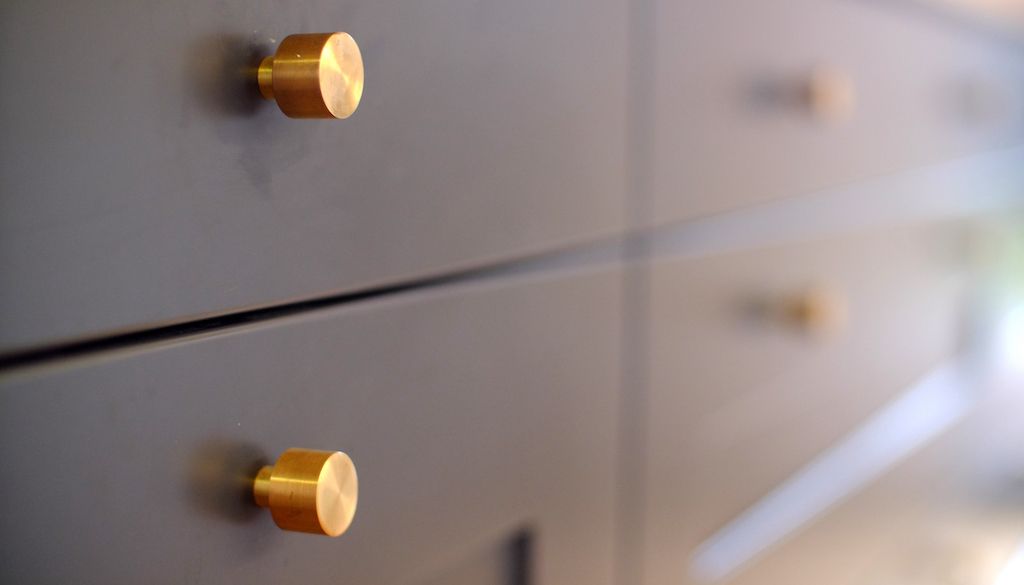
Take a look around your home, and you may notice you have brass hardware on your kitchen cabinets, bedroom drawers, faucets, light fixtures, and more. If you do have brass in your home, examine it closely. Is it dull or dirty? If so, it might be overdue for a cleaning.
Brass is a copper and zinc alloy that darkens as the copper reacts with oxygen and sulfur in the air. Humidity, skin oils and frequent handling all speed it up. You'll need to clean it to get it looking shiny again.
Before you begin cleaning
Before you clean brass, identify what you have with a magnet. Brass itself isn't magnetic, so:
- The magnet doesn't stick — it's likely solid brass. Solid brass is more durable and can handle polishes and mild acidic cleaners.
- The magnet sticks — it's brass-plated over steel or iron. The brass layer is often only microns thick, so acidic cleaners and any polishing can wear straight through it and expose the base metal underneath. Clean plated pieces with mild soap and water only.
Also, check for lacquer while you're at it. Lacquered brass looks uniformly bright and doesn't tarnish unevenly; unlacquered brass darkens over time and shows fingerprints. If a piece is bright in protected spots but dark where hands touch it, the lacquer has worn through in places.
How to clean lacquered brass
If your brass is lacquered to prevent tarnishing, wash it with water and mild cleaning supplies to keep it clean.
What you'll need
- Warm water
- Mild detergent
- A clean, non-abrasive cloth
Step 1: Clean your brass hardware
Add a few drops of mild dish soap to lukewarm water and wipe the hardware with a soft cloth. That's the whole method — lacquered brass doesn't need anything stronger, because you're cleaning the lacquer, not the metal.
Don't use ammonia, bleach, rubbing alcohol, acidic cleaners, brass polish, toothpaste, or anything abrasive. All of them strip or cloud the lacquer, and once it's damaged the brass underneath starts tarnishing unevenly — a much harder problem to fix than the dirt you started with.
If a lacquered piece is already tarnishing in patches, the coating has failed. At that point it needs the lacquer stripped and reapplied, which is a job for a metal refinisher.
Step 2: Rinse thoroughly with clean, warm water
Remove the detergent by rinsing your brass hardware thoroughly. Avoid abrasive sponges, since they may not be safe for lacquered surfaces.
Step 3: Dry with a clean cloth
Use a microfiber cloth to wipe your brass hardware dry. Go in the direction of the brushed grain so it keeps its polished look.
How to clean brass that’s not lacquered
The cleaning process is slightly different for antique brass and other raw brass items, which do not have a lacquer finish.
What you'll need
- Mild dish soap and warm water
- Microfiber cloths
- Table salt
- Lemon (or bottled lemon juice)
- Cream of tartar
- White vinegar
- Ketchup or tomato juice (optional)
- Isopropyl alcohol (optional, for degreasing)
- Commercial brass polish (optional, for heavy tarnish)
- Olive or lemon oil (optional, for finishing)
- Rubber gloves
Start with soap and water
Wash unlacquered brass in warm water with a few drops of mild dish soap and a soft cloth, then dry it completely. This removes dirt, grease and fingerprints — and it's worth doing first, because surface grime can look like tarnish. If the piece brightens up, you're done.
For stubborn grease or old polish residue, wipe with a cloth dampened in isopropyl alcohol. Alcohol is a degreaser, not a tarnish remover, so use it to prep the surface before polishing rather than as a substitute for it.
Skip abrasive sponges and scouring products on brass entirely. Brass is soft — softer than stainless steel — and abrasives leave fine scratches that dull the finish permanently and make the piece tarnish faster afterward.
Clean with lemon juice and salt
Cut a lemon in half and sprinkle table salt on it. Rub the salted lemon on the tarnished area. Wipe the brass hardware with a soft cloth and buff until the piece becomes shiny again.
If the tarnish is stubborn, you can make a special paste:
- Mix 2 parts cream of tartar and 1 part lemon juice.
- Apply the paste to the brass item and let it sit for at least 30 minutes.
- Rinse thoroughly with warm water.
- Buff with a dry cloth.
Clean with ketchup and tomato juice
Rub ketchup onto your brass with a soft cloth. Rinse and dry thoroughly.
You can also soak smaller items in a bowl of tomato juice for about 5 minutes. Afterward, rinse them with warm water and dry them thoroughly.
Use a commercial brass polish for heavy tarnish
When acidic pastes don't cut it, a purpose-made brass polish is the right escalation. Apply a thin film with a soft cloth, let it haze, then buff it off with a clean cloth following the grain. Work in a ventilated area and follow the label.
How to polish brass hardware

Use olive or lemon oil to polish your brass, since these oils can help slow tarnish. Put some oil on a cloth and wipe down your brass hardware. Dry it with a soft cotton cloth.
Brass cleaning mistakes to avoid
When cleaning brass hardware, avoid practices that can damage it or make it tarnish right away.
- Avoid using too much polish. A heavy coat discolors brass and leaves residue in crevices, so spread only a thin film with a soft cloth. Let it haze over for the time the label specifies — usually a few minutes — then buff it off completely with a clean, dry cloth.
- Avoid using chemicals and abrasive cleaning cloths. Some chemicals, like bleach, ammonia, and highly acidic cleaners, can harm your brass. Abrasive cloths can also scratch your brass hardware.
- Avoid using hot water on lacquered brass items. Use lukewarm water only on lacquered brass items, and rinse and dry them thoroughly. Never use hot water, since it can loosen the lacquer. Don’t soak or polish them, either, because that can damage the lacquer.
How to maintain your brass hardware
If you want to keep your brass hardware in good shape, take good care of it.
Clean your brass hardware regularly. Wash it in warm, soapy water every week or two, then rinse and buff dry with a microfiber cloth to slow tarnishing. Brass doesn't rust — it contains no iron — but it does tarnish, darkening as the copper in the alloy reacts with air and moisture. Drying it thoroughly is what slows that down. Be sure to wipe in the direction of the brushed grain.
Also, remove dried water spots as soon as you see them. When water evaporates from a surface, it leaves behind water deposits, sometimes called water spots. These can dry on your brass and leave a stain.
You can remove water spots with a 50/50 blend of household vinegar and water. Apply it to the affected surface for a limited time. Then rinse with water immediately and dry with a soft cloth.
Hire a house cleaner to keep your home and hardware sparkling clean
Tarnished brass can be difficult to keep nice and shiny. Instead of dealing with the stress of cleaning it yourself, hire a house cleaner to clean your home’s cabinets, knobs, light fixtures, and other items that may contain brass hardware.
Download the Thumbtack app today to start getting cost estimates from top-rated house cleaning services near you.
FAQs
Can you clean brass with just vinegar?
Vinegar alone is fairly weak on tarnish. The classic version combines it with salt and flour: mix 1 teaspoon of salt into 1/2 cup of white vinegar, then stir in flour until you have a paste. Spread it on, leave it 10 minutes, rinse thoroughly with warm water and dry immediately.
Rinsing matters — any acid left on brass keeps working and can etch the surface. And skip this on brass-plated pieces, where repeated acid exposure wears through the plating.
Will Dawn dish soap clean brass?
You can use mild dish soap and water, including Dawn dish soap, to clean your brass items.
Does hydrogen peroxide clean brass?
It's not a good choice. Hydrogen peroxide is an effective cleaner in general — it's an oxidizer, which is how it lifts organic stains and disinfects — but oxidation is exactly the process that tarnishes brass. Using it on brass tends to darken the surface rather than brighten it. Stick with mild acidic pastes like lemon and salt, or a commercial brass polish.
Does Coke/Coca-Cola clean brass?
Coke or Coca-Cola, and any other cola soda, can be used to clean brass. Rub it onto your brass, give it a thorough rinse, and dry it afterward.
How it works.

Search.
Browse profiles, see prices and use filters to find pros who match your project.

Chat.
Contact the pros you like to discuss project details.

Hire.
Check pro availability and book appointments right in the app.
Find local pros for your project
Tell us what you're looking for and we'll show you pros right for the job, with prices.